AI lyrics sound generic because the rhyme picked the word
 Silas Moser6 min read
Somebody on r/SunoAI asked a four-word question: what clichés does Suno overuse?
The thread did not have to think about it. The answer everyone landed on was a two-line parody that anyone who has generated a song recognises on sight:
Whispers of neon lights in silent nights
Walking through sunsets of grays and whites
Nobody wrote that couplet. Everybody had already heard it.
Every guide to this problem ends in the same instruction: be specific. That advice is correct and almost useless, because it never says why the specific word went missing. This piece is about the reason, and about what to do in the ninety seconds after you find it.
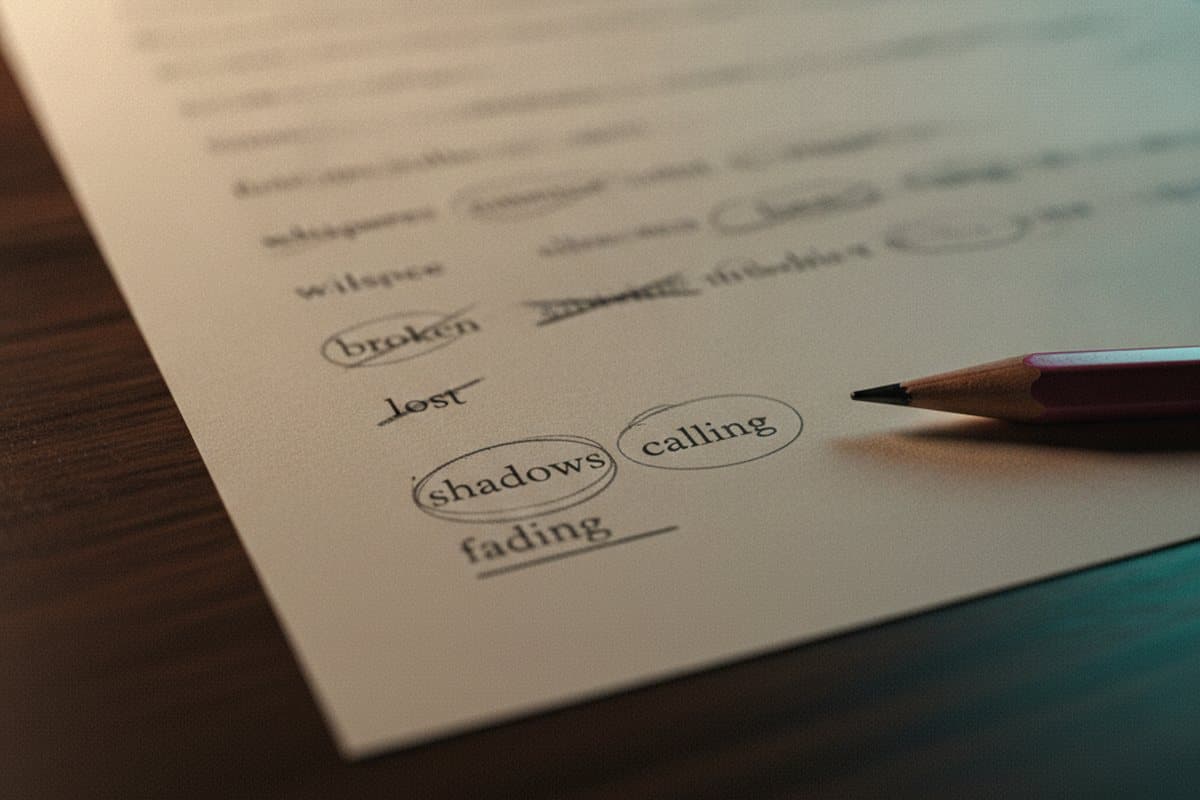
Why the same forty words keep coming back
A language model finishes your line with whatever usually comes next. Averaged across everything ever written, "the city" is followed by "lights", and a sad song reaches for "shadows".
What your grandmother kept on her windowsill is not in the average of anything.
So the machine gives you the average, because you gave it a subject and no evidence.
This is not a Suno problem. A list of the same overused phrases went up on r/udiomusic in 2024, before most of these threads existed.
Its entries are ones a songwriting teacher would have circled in 1994. A diamond in the rough. A dime a dozen.
The machine did not invent the average. It never gets tired of it.
Why ban lists stop working after one regeneration
People build the lists anyway, and they are thorough. One of the longer ones opens with neon, echoes, symphony, shadows, intertwined, melody, spectral and whispers, and keeps going well past the point where you would have stopped.
Then you generate, and this happens:
- Ban shadows and you get silhouettes.
- Ban silhouettes and you get shapes in the dark.
- Ban fire and you get embers.
- Ban embers and you get ash.
A guide on dev.to calls this landing on "the next-closest cliché". You are not stepping off the chain. You are stepping along it.
The cliché is the rhyme's fault
In short: before you change the word, look at what the line above it rhymes with. Half the time the rhyme chose the word and the meaning arrived afterwards.
This is the part nobody writing about AI lyrics says, and it changes what you do.
"Fire" is not a cliché. "Fire" one beat after "desire" is, because the rhyme picked it first. The listener hears the machinery even if they could not name it.
So try the other lever. Change the rhyme sound of the line above, and the word you were fighting leaves on its own.
The replacement does not have to rhyme as hard. "Fire" and "desire" share their whole ending, which is why the ear has the second one four beats early. "Fine" and "night" share only the vowel, and that is enough: the ear still registers a rhyme, and nobody saw it coming. Keeping the vowel and changing the consonant is the cheapest way out of a pair you are stuck in.
That is also why the strongest objection to any ban list holds. Most of the banned words are the most common rhyming words in real music, and songs people love are full of them, attached to something real.
A working songwriter said the useful version of this long before Suno existed. Harriet Schock, writing about defaulting to the nearest cliché: "The more specific those pictures are, the more unique to your experience, the less likely they are to be cliches."
Note what that does not say. It does not say avoid a list of words.
What to write instead: one object, second line
In short: put one physical, dated, specific thing in the second line of the verse. Line one can set the scene. Line two is where the average creeps in.
Here is what comes back when you ask for a sad verse and give nothing else:
[Verse 2]
The shadows of your memory keep whispering my name
and the fire that we started left me standing in the flame
Two lines, four abstractions, no room in either one.
Now the same verse after two minutes of remembering an actual kitchen:
[Verse 2]
Your shopping list is still stuck to the freezer door
green marker, dated March, and the one word milk
Nobody generates that.
Three things make that line work, and they transfer to any song:
- A detail the model cannot average. A colour, a date, a brand, a street name.
- One idea per line. Two images in a line get averaged, and the listener gets neither.
- The detail in position two. Line one earns attention. Line two is where the cliché would have gone.
What this will not fix
A banned word with nothing behind it becomes a duller synonym. A verse of duller synonyms is worse than the cliché it replaced, because at least the cliché was singable.
It cannot survive a vague brief either. If all you said was "sad song about loss", the average is the only place the model can go, and every regeneration lands one synonym over.
And it will not tell you which of your own lines are borrowed. That one stays your job.
Next steps
Pick whichever fits the song you have open right now.
- Mark every noun you could have written before you knew this person. Those are the borrowed ones, whether or not they are on anybody's list.
- Take the worst line and check what it rhymes with. If the rhyme chose the word, change the rhyme sound instead of the word.
- Write one object from the actual room, with its colour or its date, and put it in the second line.
- Regenerate once, not four times. If it is still generic, the brief is the problem, not the model.
Start with the first one. It takes about ninety seconds and it usually finds three.